



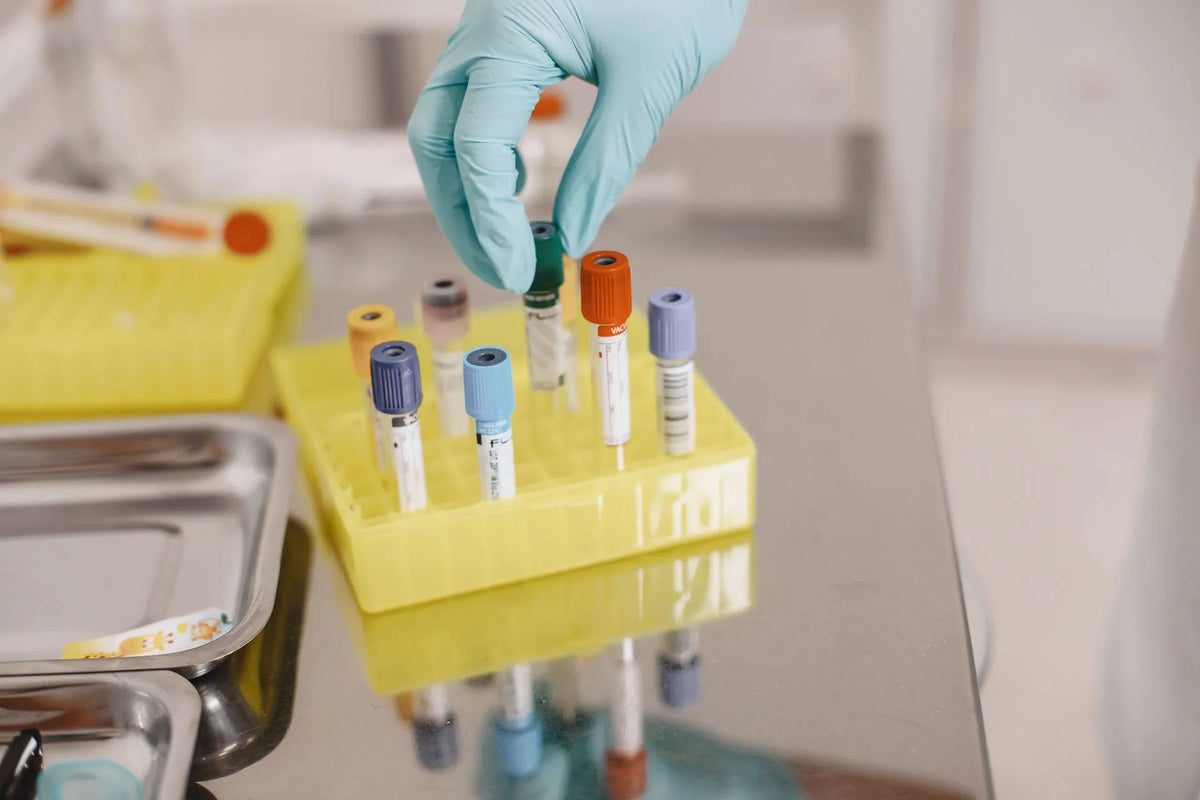
The easiest way to test testosterone levels is a morning venous blood draw at a CLIA-certified laboratory, ordered through a direct-pay lab testing service or physician. A morning venous draw, collected between 8 and 10 AM on an empty stomach, matches the diagnostic standard set by both the American Urological Association (AUA) and the Endocrine Society (Mulhall et al., 2018; Bhasin et al., 2018). At-home capillary kits can serve as a screening step, but they don't replace the venous sample that clinical guidelines require for a diagnosis.
A testosterone levels test measures total testosterone, free testosterone, and sometimes additional biomarkers like SHBG, LH, and hematocrit. This article covers each testosterone testing option, what clinical guidelines require, and what most consumer-facing resources leave out.

What Is the Easiest Way to Test Testosterone Levels?
Three sample types are used for testosterone measurement: blood, saliva, and urine. Only blood meets the diagnostic criteria established by the AUA and the Endocrine Society.
Why Saliva and Urine Tests Fall Short
Saliva immunoassays show only moderate agreement with LC-MS/MS (the reference laboratory method) and tend to inflate low values (Welker et al., 2016). Neither the AUA nor the Endocrine Society accepts saliva for diagnosing testosterone deficiency.
Urine tests measure testosterone metabolites, not the hormone itself. Hydration changes the concentration, and the result doesn't correspond to a serum value a provider can act on.
Why Blood Testing Is the Clinical Standard
Venous serum is the matrix on which every major clinical guideline was developed. The AUA and the Endocrine Society each set guideline-based thresholds that a provider uses alongside symptoms to evaluate testosterone status, and both require 2 separate early-morning draws before a diagnosis (Mulhall et al., 2018; Bhasin et al., 2018). The 2 societies use slightly different reference values (Bhasin et al., 2017), which means the same result can fall above the threshold at one lab and below it at another.
The same blood sample can read "low" at one laboratory and "normal" at another depending on the assay. The Endocrine Society's 2026 statement (Endocrine Society, 2026) recommends labs certified through the CDC Hormone Standardization Program (HoST), which holds total testosterone assays to a mean bias within plus or minus 6.4% of the CDC reference procedure (CDC, 2026).
What Makes a Testosterone Test Reliable?
A reliable testosterone test requires 3 things: the right sample (venous blood), the right time (early morning, fasting), and the right lab (CLIA-certified, preferably CDC HoST-certified). Missing any 1 of those can reduce reliability and may prompt a repeat draw. Understanding testosterone test accuracy helps separate a useful result from a misleading one.
At-Home Testing vs Lab-Based Blood Draws
At-Home Capillary Kits
At-home kits use a fingerstick or upper-arm capillary device. The sample is collected as dried blood spots (DBS) or liquid capillary blood, mailed to a CLIA-certified lab, and results arrive through an online portal.
Correlation between capillary DBS and venous serum can be high, but the 2 matrices aren't interchangeable. A 2026 validation study found DBS values approximately 35% lower than serum in untreated men (Clin Chem Lab Med, 2026). For men on testosterone gel or cream, the same study reported extremely elevated DBS readings from skin contamination.
No at-home capillary result, by itself, meets the AUA or Endocrine Society standard for diagnosing testosterone deficiency. An abnormal at-home result should prompt a proper hormone blood test at a laboratory.
Lab-Based Venous Blood Draws
A venous draw at a CLIA-certified lab, collected between 8 and 10 AM after an overnight fast, is the method both major U.S. guidelines were built on. A trained phlebotomist draws from a vein in the arm. Results are typically available within a few days.
Telehealth providers and direct-pay lab companies can order the draw and have it collected at a national draw-site network. The sample is processed on the same equipment as any hospital or endocrinology office order.
|
Feature |
At-Home Capillary Kit |
Lab Venous Blood Draw |
|
Sample type |
Fingerstick or upper-arm capillary |
Venous serum from arm |
|
Guideline-accepted for diagnosis |
Not accepted as a standalone diagnostic method by AUA or ES |
Yes (AUA, Endocrine Society) |
|
Matrix difference vs reference |
~35% lower than serum in DBS |
Reference standard |
|
Collection error risk |
Higher (user-dependent, gel contamination) |
Lower (trained phlebotomist) |
|
Convenience |
No appointment, done at home |
Requires a draw site visit |
|
Typical turnaround |
5-10 business days |
2-5 business days |
|
Insurance coverage |
Rarely covered |
May be covered with physician order |
How to Prepare for a Testosterone Test
Timing and Fasting
Testosterone follows a daily rhythm, peaking in the early morning and declining through the afternoon. The AUA specifies early-morning draws (Mulhall et al., 2018). The Endocrine Society recommends fasting samples (Bhasin et al., 2018). While the AUA doesn't explicitly require fasting, one study found that a mixed meal lowered total testosterone by roughly 30% (Lehtihet et al., 2012). A morning fasting draw reduces one known source of variability.
These rules apply to both at-home kits and lab draws. An afternoon, non-fasting sample can produce a result that looks low when the actual morning fasting value would be normal.
What to Avoid Before Testing
Fast for at least 8 hours before the draw. Stay hydrated with water. Avoid intense exercise, sexual activity, and cycling or horseback riding for 2-3 days beforehand, as these can temporarily raise levels.
For men already on TRT, draw timing relative to the dose varies by formulation. A provider will specify when to collect the sample based on the prescribed regimen. Venous blood from a clean (non-application) site is necessary for men on topical testosterone to avoid contamination. The blood work preparation guide covers the full preparation checklist.
What Does a Testosterone Test Measure?
Total Testosterone
Total testosterone measures all circulating testosterone, both protein-bound and unbound. Whether a result falls below the guideline-referenced threshold depends on the assay, the lab, and the clinical context a provider considers (Mulhall et al., 2018; Bhasin et al., 2017).
A single total testosterone number doesn't tell the full story without clinical context. Symptoms, age, body composition, and medication use all shape what a given level means.
Free Testosterone
Only a small fraction of circulating testosterone is unbound (free). The rest is carried by SHBG and albumin. The Endocrine Society recommends measuring free testosterone when total testosterone is near the lower limit or when SHBG is expected to be abnormal, as in obesity, thyroid disease, or liver disease (Bhasin et al., 2018).
Direct analog free-testosterone immunoassays are not recommended due to known measurement limitations (Bhasin et al., 2018). The clinically accepted method is calculated free testosterone from total testosterone plus SHBG using the Vermeulen equation, or equilibrium dialysis where available (Vermeulen et al., 1999).
SHBG and Albumin
SHBG binds testosterone tightly, and the body can't use SHBG-bound testosterone. Low SHBG (common in obesity and insulin resistance) can make total testosterone look normal while free testosterone is high. High SHBG (common with aging, hyperthyroidism, and certain medications) can suppress free testosterone even when total levels appear adequate.
Albumin-bound testosterone detaches more easily and is considered bioavailable. Understanding normal hormone levelshelps put these markers in context.
Other Biomarkers Worth Testing
The AUA diagnostic algorithm calls for LH in all men with low testosterone (Strong Recommendation, Grade A) to distinguish primary from secondary hypogonadism. Prolactin should be measured if LH is low or inappropriately normal. Hematocrit should be measured before starting therapy, per AUA recommendations, and PSA is recommended for men 40 and older (Mulhall et al., 2018).
Estradiol, liver enzymes (ALT, AST), and a metabolic panel are often included in a hormone panel to screen for conditions that mimic or contribute to low testosterone symptoms. Individual markers can also be added through the biomarker catalog.

Who Should Get a Testosterone Test?
Testing is appropriate when symptoms are present and a clinical evaluation supports it. Both guidelines require symptoms alongside low levels for a clinical diagnosis. Low testosterone by lab value alone is not an automatic treatment indication. In one U.S. cohort study, nearly half of men 50 and older with biochemically low testosterone reported no symptoms (Araujo et al., 2007).
Signs of Low Testosterone in Men
Symptoms that may warrant testing include reduced libido, erectile dysfunction, fatigue, loss of muscle mass, increased body fat, depressed mood, reduced concentration, and unexplained anemia. These overlap with depression, sleep apnea, hypothyroidism, and diabetes. Testosterone testing alone doesn't confirm a cause. A clinician evaluates the full picture.
Why Two Morning Tests Are Required for Diagnosis
About 30% of men whose first testosterone measurement falls below the diagnostic threshold have a normal value when retested (Bhasin et al., 2018). Acute illness, poor sleep, medications (opioids, glucocorticoids), and stress can all temporarily suppress testosterone.
Both the AUA and the Endocrine Society require at least 2 early-morning measurements on separate days before diagnosing hypogonadism. A single at-home fingerstick reading doesn't meet that standard. Neither does a single venous draw.
A 2022 JAMA Internal Medicine audit found that most reviewed platforms did not follow both AUA and Endocrine Society two-morning-test protocols (Dubin et al., 2022). Understanding that gap matters before choosing where to get tested.
What Else Should Be Tested Alongside Testosterone?
A standalone total testosterone number is often not enough for a treatment decision. The AUA diagnostic algorithm recommends repeat morning total testosterone, LH, hematocrit, prolactin (if LH is low or normal), and PSA for men 40 and older.
When total testosterone is near the cut-off or SHBG is likely altered, adding SHBG and albumin allows for a calculated free testosterone. Men considering treatment who want children should discuss this risk and their options with a provider before starting therapy, as exogenous testosterone commonly suppresses spermatogenesis.
The lab builder tool allows men to assemble a panel with these markers in a single order.
Getting the Easiest Way to Test Testosterone Levels Right
The easiest way to test testosterone levels that meets clinical guidelines is a morning fasting venous blood draw at a CLIA-certified, ideally CDC HoST-certified, laboratory. Ordering through a telehealth provider or direct-pay service removes the need for an office visit while preserving sample quality.
At-home capillary kits serve as a screening option but don't replace venous blood for diagnosis. Men on topical testosterone should avoid them. Two morning tests are needed before any treatment decision. A provider can help interpret results in the context of symptoms, medical history, and individual goals. The step-by-step testing process covers what to expect from order to results.
Disclaimer: This blog post is intended for informational purposes only and should not be considered medical advice. Always consult a healthcare professional before making changes to your health routine.
FAQs
Can 1 at-home fingerstick diagnose low testosterone?
No. The AUA requires 2 total testosterone measurements taken on separate early-morning occasions before diagnosing testosterone deficiency (Strong Recommendation, Grade A). A single capillary fingerstick can suggest a possible low value, but it doesn't meet the diagnostic standard. An abnormal at-home result should be confirmed with a morning fasting venous blood test at a CLIA-certified laboratory.
What is the easiest way to test testosterone levels at home?
The easiest at-home option is a capillary blood kit (fingerstick or upper-arm device) mailed to a CLIA-certified lab. These kits don't require a physician visit to order. They're best used as a screening step. Men using testosterone gel or cream should avoid capillary kits because residual product on the skin can contaminate the sample and produce falsely high readings.
How many times should testosterone be tested before starting treatment?
Clinical guidelines require at least 2 early-morning measurements on separate days. About 30% of men whose first result falls below the diagnostic threshold have a normal value when retested. Illness, poor sleep, stress, and certain medications can temporarily suppress testosterone. A single low number, from any method, is not enough to start treatment.
Does fasting affect testosterone test results?
Yes. One study found that a mixed meal lowered total testosterone by roughly 30% (Lehtihet et al., 2012), which is why the Endocrine Society recommends fasting. The AUA specifies early-morning draws but does not explicitly require fasting. To get the most representative baseline, a morning draw after an overnight fast of at least 8 hours is the standard clinical approach.
What is the difference between total and free testosterone?
Total testosterone measures all circulating testosterone, both protein-bound and unbound. Free testosterone is the small fraction that is unbound and available for the body to use. The Endocrine Society recommends measuring free testosterone when total testosterone is near the lower limit or when SHBG is expected to be abnormal (as in obesity or thyroid disease). Calculated free testosterone from total testosterone plus SHBG is the accepted clinical method.
Why do different labs give different testosterone numbers?
Non-standardized assays produce different results and different reference ranges on the same sample. The CDC Hormone Standardization Program (HoST) exists because lab-to-lab variation was large enough to misclassify men. The AUA and Endocrine Society use different guideline-based thresholds, and the printed reference interval on a lab report may not match either society's cut-off. A provider interprets the number alongside symptoms and clinical context.
Should men on testosterone gel use at-home fingerstick kits?
They should avoid them. A 2026 validation study found that men on topical testosterone had extremely elevated dried blood spot values compared to venous serum because of local skin contamination. Residual gel or cream on the hands or collection site transfers to the sample. Venous blood drawn from a clean site by a phlebotomist is the monitoring method clinical guidelines assume.
References
Share:
At-Home Testosterone Test And How Accurate Are They?
Hormones Checked Before Starting TRT: Pre-TRT Lab Guide