

What's tested

What We Measure (The “DIG” Framework)

We analyze your gut health across three critical pillars:

1. Digestion & Absorption

  • Pancreatic Elastase-1: Are you producing enough enzymes to break down that 200g of protein, or is it rotting in your colon?
  • H.pylori Antigen: The “Stomach Acid Thief.” This bacteria lowers gastric acidity, blocking the absorption of Zinc and Magnesium — critical cofactors in hormonal synthesis.
  • Fecal Fats: Are you absorbing the dietary lipids required to synthesize steroid hormones?

2. Inflammation & Immunology

  • Calprotectin: The gold standard for detecting “silent” inflammation that drives systemic cortisol and kills recovery.
  • Secretory IgA (sIgA): A marker of your mucosal immune system. Low levels indicate “Mucosal Burnout” often caused by overtraining and chronic stress.

3. The Gut Microbiome

  • Metabolic Indicators: Levels of Akkermansia muciniphila (linked to leanness and insulin sensitivity) and Faecalibacterium prausnitzii (anti-inflammatory).
  • Short Chain Fatty Acids (SCFAs): We measure Butyrate production—the absolute fuel for your gut lining and a potent regulator of systemic metabolism.
  • Pathogens: Comprehensive detection of Parasites, Worms, pathogenic Bacteria (like Klebsiella or Salmonella), and Yeast/Fungi (like Candida).
Who Is This For?

This panel is engineered for the high-performer who demands data. It is essential if you:

  • Experience bloating, abdominal distension, or excessive belching.
  • Experience “Brain Fog” or fatigue despite good sleep (a sign of neuro-inflammation).
  • Can’t gain muscle or lose fat despite adherence to strict macros.
  • Are on TRT or HRT and struggling with estrogen management (a sign of an imbalanced Estrobolome).
  • Suspect food sensitivities or have a “nervous stomach.”
  • Want to audit your health at the systems biology level.
What Are The 85+ Biomarkers Are Tested?

1. Digestion & Absorption (Functional Biochemistry)

These markers quantify the efficiency of your digestive organs.

  • Pancreatic Elastase-1 (PE-1): The gold standard marker for exocrine pancreatic function (enzyme output).
  • Products of Protein Breakdown: (Valerate, Isobutyrate, Isovalerate) Measures undigested protein reaching the colon (putrefaction).
  • Fecal Fats (Total): Measures fat malabsorption.
  • Triglycerides: Indicates efficacy of lipid hydrolysis (lipase activity).
  • Long-Chain Fatty Acids: Indicates efficacy of lipid absorption.
  • Cholesterol: Assess lipid metabolism and absorption.
  • Phospholipids: Marker of cell membrane breakdown and biliary function.

2. Inflammation & Immunology

These markers assess the structural integrity and immune status of the gut lining.

  • Calprotectin: Major marker of neutrophil-driven inflammation (differentiates IBD vs. IBS).
  • Eosinophil Protein X (EPX): Marker of allergic response (food sensitivities) and parasitic activity.
  • Fecal Secretory IgA (sIgA): The primary immunoglobulin of the gut mucosa; measures immune resilience.
  • Fecal Occult Blood: Detects hidden blood in the stool (GI bleeding).

3. The Gut Microbiome (Metabolic Markers)

These markers measure the functional output of your microbiome.

  • Short-Chain Fatty Acids (SCFAs): Total SCFAs, Acetate, Propionate, n-Butyrate (critical for gut lining health).
  • Beta-Glucuronidase: The “estrogen recycling” enzyme.
  • pH: Acidity/Alkalinity of the stool.

4. Commensal Bacteria (PCR Quantification)

We use DNA quantification to measure the absolute abundance of 24 specific bacterial genera/species.

  • Keystone Species: Akkermansia muciniphila, Faecalibacterium prausnitzii.
  • Phyla: Bacteroidetes, Firmicutes, Actinobacteria, Proteobacteria.
  • Commensal Targets: Bacteroides vulgatus, Bifidobacterium longum, Bifidobacterium spp., Lactobacillus spp., Lactobacillus rhamnosus, Prevotella spp., Roseburia spp., Ruminococcus spp., Escherichia coli (commensal strain), Clostridium spp., Collinsella aerofaciens, Desulfovibrio piger, Fusobacterium spp., Methanobrevibacter smithii, Oxalobacter formigenes, and more.

5. Parasitology (PCR + Microscopy)

A dual-methodology approach to ensure no organism is missed.

  • PCR Targets (6 Specific Pathogens): Blastocystis spp., Cryptosporidium parvum/hominis, Cyclospora cayetanensis, Dientamoeba fragilis, Entamoeba histolytica, Giardia.
  • Microscopic Examination (O&P): Visual inspection by a parasitologist for Nematodes (Roundworms), Cestodes (Tapeworms), Trematodes (Flukes), and other Protozoa.

6. Bacteriology & Mycology (Culture + MALDI-TOF)

We use a combination of culture and antigen testing to identify active infections and determine which antibiotics/botanicals kill them.

  • Pathogenic Bacteria: Culture for Salmonella, Shigella, Campylobacter, Aeromonas, Plesiomonas, Yersinia, Vibrio,etc.
  • Mycology (Yeast/Fungi): Culture for Candida albicans, Candida spp., Geotrichum, Rhodotorula, and other fungi.
  • H.pylori Antigen: Direct stool antigen testing for active Helicobacter pylori infection. This is the “”Stomach Acid Thief” that causes ulcers and blocks nutrient absorption.
  • Sensitivity Testing: If a pathogen or yeast is found, we test it against pharmaceutical agents (e.g., Ciprofloxacin, Fluconazole) and botanical agents (e.g., Berberine, Oregano, Uva Ursi) to determine how to kill them.
Frequently Asked Questions:
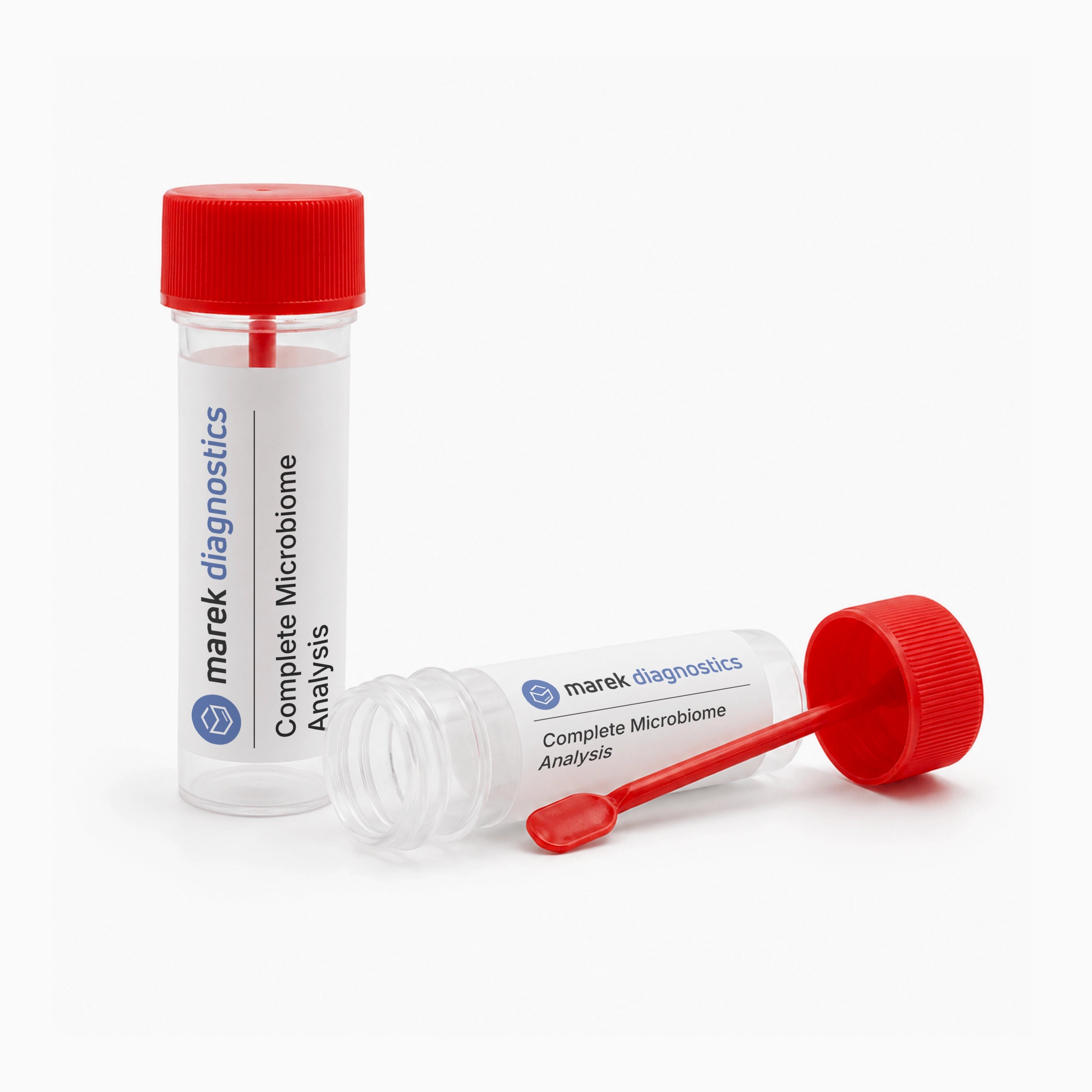
  • How is the sample collected? This is an at-home stool test. You will receive a kit with detailed instructions. You collect the sample in the privacy of your home and ship it back in the pre-paid envelope.
  • Why is the H. pylori testing important? Standard GI tests often skip H. pylori or use breath tests that can be inaccurate. We add the specific Antigen test because H. pylori is a master disruptor of stomach acid. Without adequate acid, you cannot absorb the nutrients required for hormonal health.
  • What parasites do you test for? We utilize a “dual-detection” methodology combining PCR technology (DNA matching) with Microscopic Examination (O&P) to ensure no organism goes undetected. While standard tests often miss intermittent shedders, our complete microbiome analysis covers:
  • Protozoa (via PCR & Microscopy): We target the most common performance-robbing organisms, including Blastocystis spp., Cryptosporidium, Giardia, Entamoeba histolytica, and Dientamoeba fragilis.
  • Nematodes & Helminths (via Microscopy): Our parasitologists visually inspect for Roundworms (Ascaris), Tapeworms, Flukes, and Hookworms.

Other Pathogens: The microscopic analysis allows for the identification of any ova or parasite based on morphology.

Can I use my insurance?

Marek Health is a cash-pay platform designed to bypass insurance limitations, allowing us to order the comprehensive testing you actually need, not just what is “medically necessary” for acute disease. You can, however, use HSA/FSA funds in many cases.

Lab panel details

  • Sample type: Stool

  • HSA/FSA: Accepted

  • Results: Emailed to you

  • Preparation: Fasted (8-12hrs)

  • Meets treatment requirements: Yes

How it works

Purchase your tests

Purchase this test and any other tests you'd like online. A healthcare provider will review and approve your test requests; no healthcare provider visit is required.

Provide your sample

A collection kit will be mailed directly to you. Follow the included instructions to provide your sample, then ship it back to our lab using the prepaid return packaging.

Get your results

Our partnered facilities will process your lab work. Test results typically arrive within 14 business days, and you'll receive an email as soon as they arrive.

Lab panels designed by Board Certified Medical Practitioners

All of our expertly built lab panels are designed by a team of Board Certified Medical Practitioners who lead the charge in preventative medicine.

More expert built panels

Lab work FAQs

Please read our FAQs page to find out more.

How soon do I need to return my specimen samples?

Plan to complete your collection early in the work week and be sure to ship your pack within 24 hours of collection to ensure specimens are viable.

You should also note that some collection packs contain materials that expire (this date is printed on the box label). Plan to collect and return your pack well before that date or within 45 days of receiving the collection pack, whichever comes first. If the pack is not returned within this timeline, we may not be able to complete your test.

How quickly will my lab results arrive?

Your lab results will typically arrive within two weeks, though processing time may vary based on the size and complexity of your panel. Rest assured, once your results are ready, they will be securely delivered to your email.

Does Marek Diagnostics accept insurance?

Marek Diagnostics is a cash-pay service. Our platform offers direct access to comprehensive testing without the limitations, denials, or delays imposed by insurance companies. If traditional insurance covered the kind of proactive, high-quality lab work we offer, Marek Diagnostics wouldn’t need to exist. 

However, many clients successfully use their HSA/FSA to cover their testing costs. Marek Diagnostics is partnered with TrueMed for convenient deployment of HSA/FSA funds at checkout.

Why can’t I order labs in New York, New Jersey, or Rhode Island?

Due to state regulations, Quest services are not available to residents of NY, NJ, or RI when ordered through our platform. If your address is in one of these states, you'll be notified at checkout and won’t be able to complete your order for restricted items.

You can still purchase:

  • Supplements, apparel, and other non-lab items

Not sure which items are restricted? The checkout system will alert you automatically, or you can contact our team for assistance.

Didn’t find your answer?

Don't hestitate to reach out